
Staying Connected on the Road: The Ultimate Guide to RV Internet Solutions
At Rolling Rhapsody RVs, our entire mission is built around the idea of "Disconnecting to Reconnect." We firmly believe that life is better with more campfires, fewer screens, and intentional time spent enjoying God's great outdoors.
However, we also live in the real world. We know that for many families, maintaining a solid digital infrastructure is the only thing that makes a week-long getaway possible. Whether you need to clock a few hours of remote work, upload your race day photos from the Talladega Superspeedway, or stream a movie on a rainy afternoon, navigating data caps, throttling, and dead zones can be incredibly frustrating.
We’ve monitored the power draws and figured out what actually works. Here is our expert guide to the best RV internet solutions available today.
1. Starlink: The Ultimate Boondocking Companion
When it comes to remote connectivity, Starlink has completely changed the game. Utilizing a constellation of low-earth orbit satellites, Starlink provides high-speed, low-latency internet almost anywhere with a clear view of the sky.
The Pros: It is absolutely unmatched for off-grid dry-camping and boondocking. If you are parked deep in a National Forest miles away from the nearest cell tower, Starlink will still deliver speeds capable of handling Zoom calls and heavy streaming.
The Cons: It requires a wide-open sky; heavy tree cover (like you find in many Alabama state parks) will cause constant micro-drops in service.
The Power Reality: The Starlink router and dish require 120V AC power. While every Rolling Rhapsody RV comes equipped with a 200-watt solar system to keep your 12-volt lights and water pump running, you will need to be plugged into shore power or running the generator to power your Starlink!
2. Cellular "Home" Internet (T-Mobile & Verizon 5G)
Over the last few years, cellular providers have rolled out 5G Home Internet gateways. These plug-and-play modem/router combos use the same cellular towers as your phone but are designed to provide Wi-Fi to a whole house—or in this case, a luxury RV.
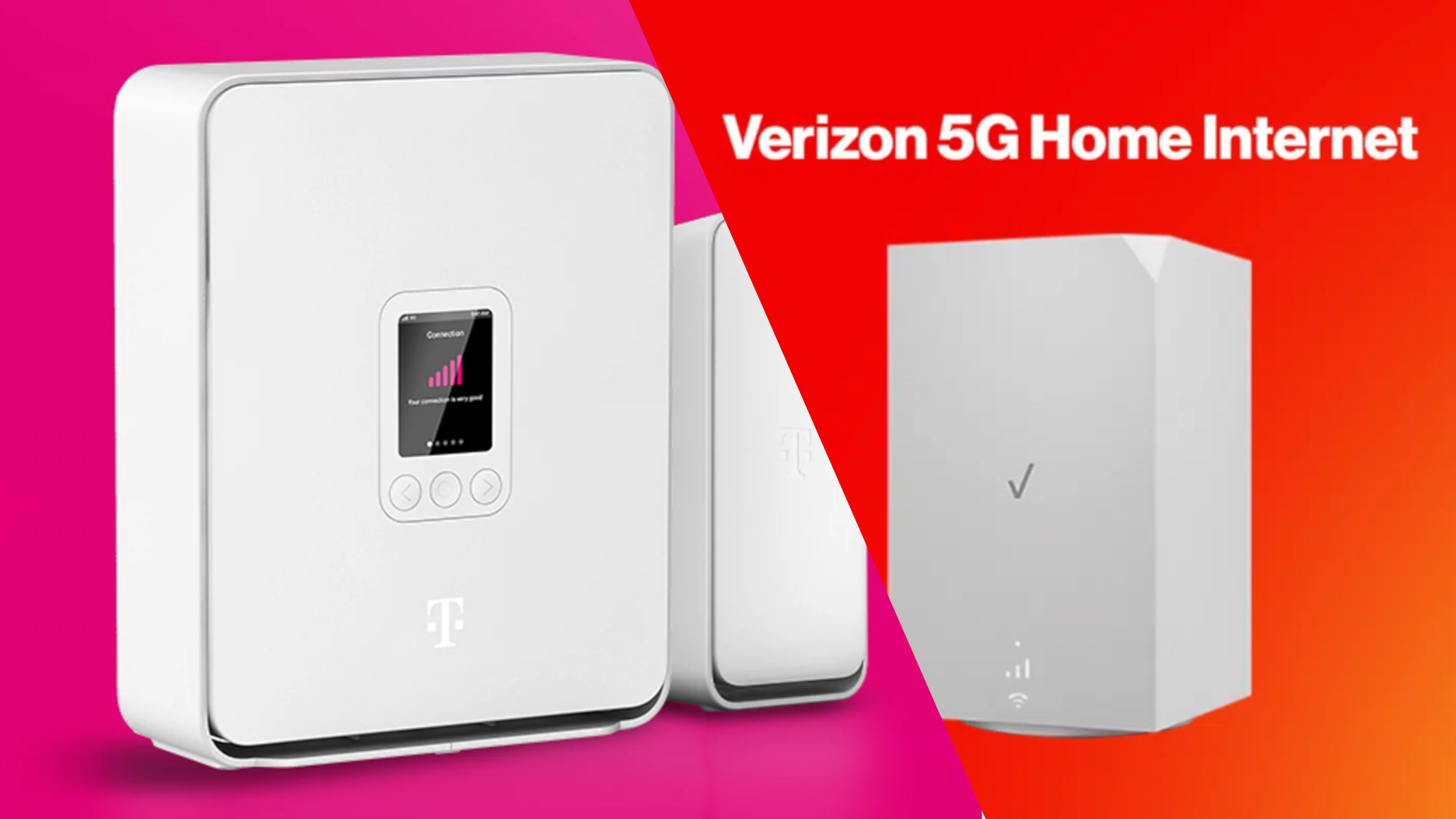
The Pros: These plans are often truly unlimited with no data caps and are surprisingly affordable. When you are near a major city or a well-covered area, the speeds are phenomenal.
The Cons: These gateways are technically designed for fixed residential addresses. While many RVers travel with them successfully, providers occasionally enforce geo-fencing policies. Tower congestion during massive events—like an Auburn tailgate or a packed NASCAR race weekend—can also temporarily slow down your speeds.
3. Dedicated Cellular Hotspots (Jetpacks & MiFis)
Before Starlink and 5G gateways, dedicated mobile hotspots were the gold standard for RV living. Devices from AT&T, Verizon, and T-Mobile remain incredibly popular as highly portable internet solutions.
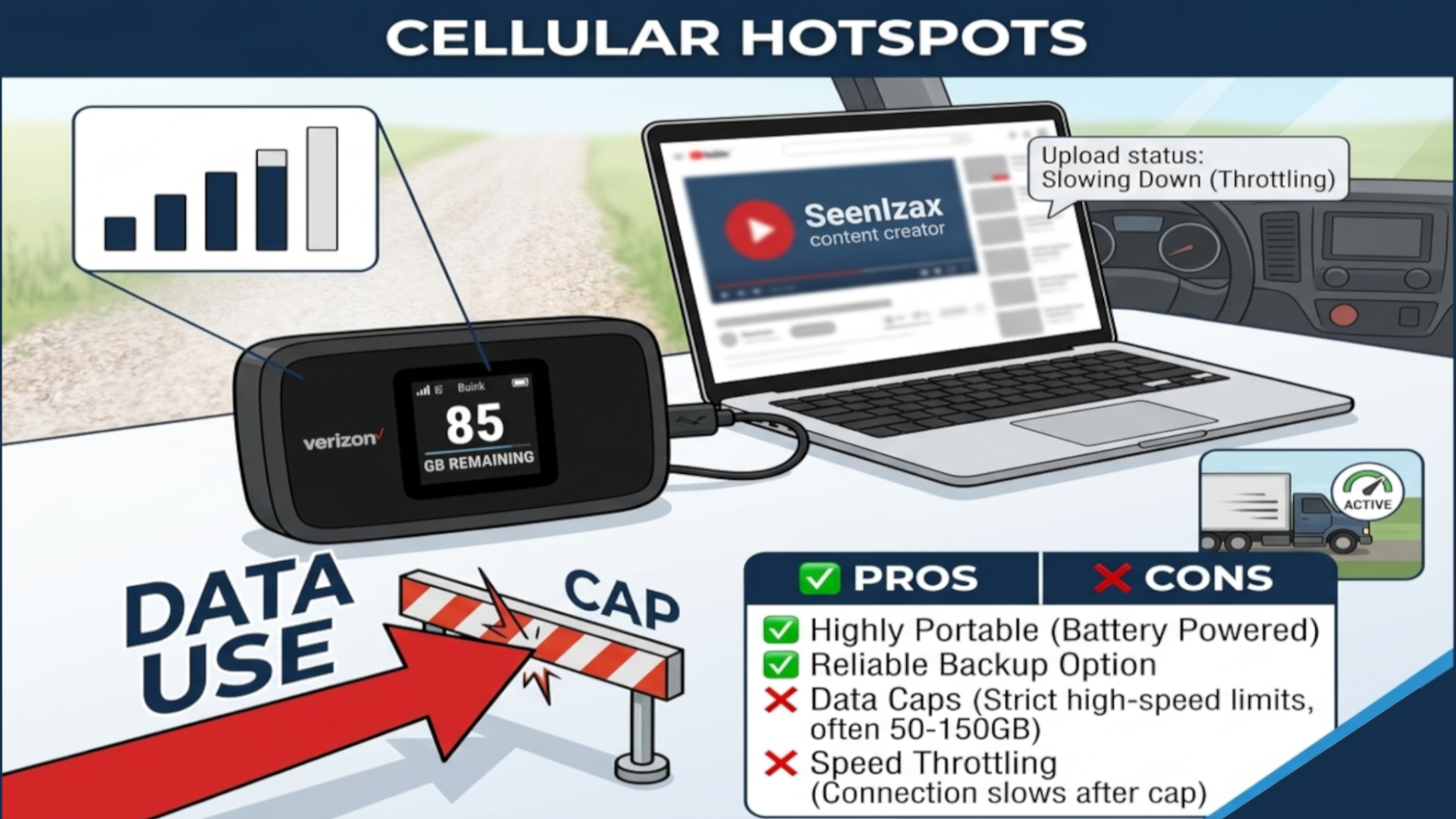
The Pros: They run on their own internal battery power, making them perfect for instant connectivity the moment you arrive at the campsite. They are highly reliable as a backup system if your primary internet goes down.
The Cons: Data caps. Almost all hotspot plans come with a strict high-speed data limit (usually between 50GB and 150GB). Once you hit that cap, your speeds are severely throttled, making it nearly impossible to upload large video files or stream in HD.
4. Campground Wi-Fi: The Free Backup
Almost every modern RV park advertises "Free Wi-Fi," but veteran travelers know to manage their expectations.
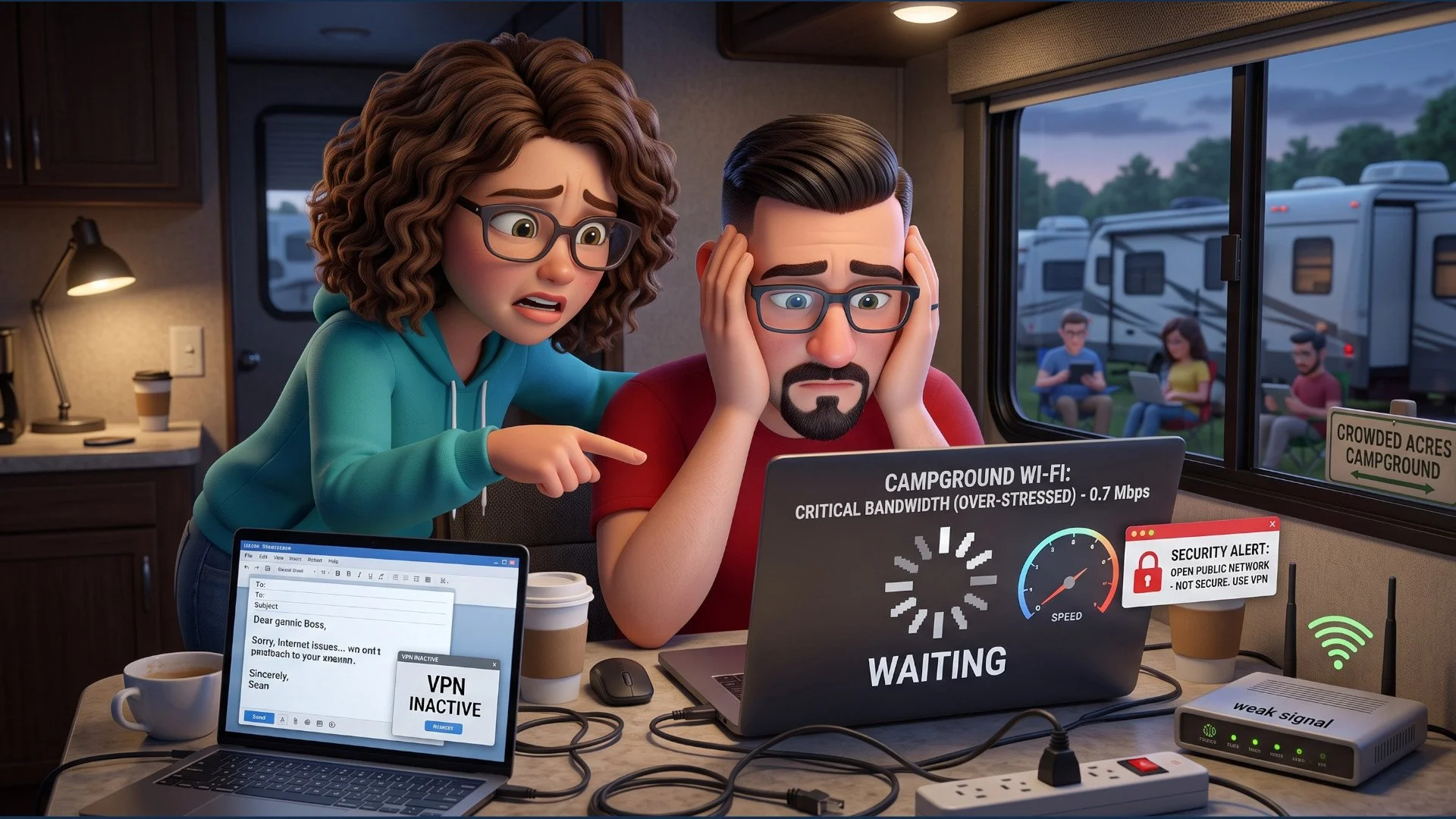
The Reality: Campground networks are notoriously over-stressed. When the park is full and everyone is trying to log on after dinner, the bandwidth usually crawls to a halt.
The Verdict: Treat campground Wi-Fi as a secondary backup for basic web browsing and checking emails. Never rely on it for critical work meetings. Expert Tip: Always use a VPN (Virtual Private Network) when connecting to open public networks to keep your personal data secure.
The Rolling Rhapsody RVs Recommendation
There is no "one size fits all" solution. The most reliable setup for a digital nomad usually involves redundancy—pairing Starlink for remote boondocking with a cellular hotspot for heavily wooded areas.
Whether you are boondocking in the wilderness or enjoying a premium luxury RV rental with us at the track, having the right setup ensures you never miss a beat—so you can get your work done quickly and get back out to the campfire.
Ready to plan your next getaway? At Rolling Rhapsody RVs, we specialize in 100% delivery-only RV rentals. We deliver high-end, fully equipped RVs right to your campsite, level the rig, and hook up the utilities. We handle all the heavy lifting and maintenance so you can just show up, log on (if you have to!), and relax.
Browse our delivery-ready luxury fleet today and let’s get you on the road!
